Re-imagine workplace culture
Learn to make wellbeing work
Mokita is a word from Papua New Guinea meaning: the truth that everybody agrees not to talk about.
Workplaces are full of these truths. Power dynamics. Emotional struggles. Inter-personal conflicts. Such unspoken forces damage your mental health, productivity, and purpose.
Mokita Learning provides
workshops,
coaching, and
learning experiences so you can:
Reveal those dynamics
Reimagine possibilities
Rebuild the way you work - so your whole team can flourish.
We don’t just help you create a culture that is kind, emotionally intelligent, and human.
We show you how to channel this into a team that is faster, smarter, more creative, and more collaborative.
Skilled employees don’t want to sacrifice their well-being for their career. They are quitting or ‘quiet quitting’ in record numbers.
And the key culprit?
Workplace culture.
Culture Matters
20%
of skilled workers want to quit this year (PwC 2022)
Workplace culture
is the number one reason for quitting a job (MIT 2022)
2 x
an employee's salary - the cost of replacement (BEIS 2020)
Psychological Safety
is the most important factor in productive teams (Rozovsky 2017)
Training that works
Our workshops and training are designed around your context, so that you can:
- Build cultures that improve emotional resilience and mental health
- Learn psychological tools for more human, more creative, and more engaged work
- Develop practices to make the most out of
complex,
changing circumstances


Real Learning for Real Change
If your organisation can’t change, you won't just lose your best talent.
Workplaces that provide safe, meaningful, and bullshit-free work environments are also faster, more productive, and better at problem-solving, decision-making, adapting and improving.
Mokita makes this change happen. We blend psychology, philosophy, anthropology, and years of mental health experience with the most vital ingredient - your lived experience.
We'll work with you to create a culture that works for you - better relationships, communication, team work and wellbeing.
Surveying and Mapping
Learning only happens if built around the real challenges you face. As trained researchers, we use a range of methodologies to understand you before we design.
Narrowing the Target
Learning will be based around key themes and practices that will best serve your needs. These are tailor-made, but might include things like:
- Leadership and Power
- Emotion at work
- Relational systems
- Employee flourishing
- Navigating complexity
- Honest conversations
- Conflict as asset
Deep Learning
Group workshops and individual coaching sessions consist of three elements:
- Knowledge sharing: insight into key issues from academic research
- Making meaning: Connecting the theory to your experience
- Integration: Exercises to refine knowledge and insight for daily practice
Don't Stop Me Now
Real learning is an iterative process of experimentation, refinement, and change.
We support this whole process whilst working together - and beyond. We'll support with check-ins and resources up to 6 months after we've finished.
Learning just for you
Bespoke. Artisan. Tailored. Fancy.
Mokita Learning will design a learning program tailored to your needs and budget.
Blending our thinking with your expertise creates the most impact on team culture, job satisfaction, workplace wellbeing, and emotional intelligence. You are the expert - we'll help you make the most of what you already have.
Have a look below for the kind of programs we could build for you.
Untuitive - think differently
Many of the challenges we face at work - emotionally, relationally, productively - are about the way we think about the problems we are facing. This set of workshops supports you to think differently. It will open up possibilities, optimism, and opportunity.
Unlearning
Humans are creatures of habit - and undoing those habits is the first step to change.
We explore the neuroscience, psychology, and practice of recognising and acting on what needs to be unlearned.
Be More Inefficient
Efficiency is great in light bulbs - but in humans, things are far more complex.
These sessions explore efficiency across economics, history, and business science. We show how a more expansive approach can improve relationships, productivity, and problem-solving.
Occam's Spoon - the dangers of simplicity
Making things simple is great if you’re working with toddlers. If not, it can create tiny, misshapen pieces of a puzzle that don’t match reality.
We explore complexity science and human nature to help you and your team navigate the tightrope between simplicity and complexity.
How to Let it Die
Change is inevitable - but too often we cling on, missing out on immense learning and growth.
In this workshop, anthropology and psychology combine so you can make the most out of change - productively and emotionally.
Humanagement - lead differently
Leadership is a vital component of cultural change. But it's nuanced, sticky, and finely balanced. Most quick-fixes are too broad, too simplistic, and ignore vital nuances on which success is dependent.
Mokita works with leaders to develop approaches to power, management, and progress that navigate these complexities. This creates organisational success and - just as importantly - a kind, honest, humane culture.
Taming the Leader, Unleashing the Work
The challenges of management can bring out the worst in us. Without realising, we become micro-managers, bad communicators, and overly self (and other) critical.
We explore the systemic and psychological nature of leadership in your context, helping your team re-think and re-build ways of relating and leading.
SMART Goals - Silly, Myopic, Anal ReTentive
Purpose and shared goals are vital for teams and organisations, and yet - done badly - mirror the behaviours of people in the throes of addiction: narrowing focus, ignoring truths, and creating long-term pain.
Looking at the sociology and neuroscience of motivation, we explore alternative ways of making progress for business and wellbeing.
If You’re Right, You’re Wrong - Contradiction For Better Decision-Making
In a complex, changing world, how do we move forwards when there are no 'right' answers?
We use complexity science and psychology to improve conflict, power, and decision-making processes in your context.
Dictators, Revolutionaries, and Clowns - Power at Work
Power is the force that gets things done - but can only be optimised if we are having honest, frank conversations about it.
Exploring the impact of diverse forms of power on our brains, behaviours and culture is a necessary step in making best use of it - building kinder relational dynamics and stronger teams.
Emotion matters - feel differently
Emotion is the fundamental lens through which we experience the world. However, our failure to take this seriously creates endless problems - conflicts, blockages, disengagement and - at worst - misery.
Mokita can help your organisation develop the knowledge, skills, and practices to better understand, work with, and improve the emotional realities of your organisation. This leads to smarter, quicker, and far more rewarding work.
Feel Worse at Work
Happiness? Resilience? No - the first step to a healthy environment is working out how to make space for difficult feelings.
Through psychology, philosophy and anthropology, we will consider the emotional norms of your culture and support a more honest, healthy, and accepting space for all emotions.
Make Yourself Uncomfortable
Discomfort is at the root of so many of our behaviours. Changing our relationship to it can open up vast amounts of learning, flexibility, and growth.
We explore discomfort through a theoretical and applied lens to support individual and collective change.
Stop Trying So Hard
Perfectionism is linked with a plethora of mental illnesses, yet our drive to ‘do more’ continues.
We explore psychology and sociology to build practices that allow your team to improve - not by doing more, but by making the most of ‘good enough.’
The Importance of Unprofessionalism
When professional identities aren’t continually re-evaluated, they create rigidity, illusion, and even dehumanisation.
We look at the history and psychology of professionalism to support you to create a more flexible, human, and intelligent workplace.
Make yourself uncomfortable...
We love getting stuck into the difficult things. We help you tackle power, decision-making, relationships, beliefs, conflict and more.
... with care
We do this with kindness, expertise, humour, and in a safe environment.
But if you’re not a little bit uncomfortable, you’re not learning.
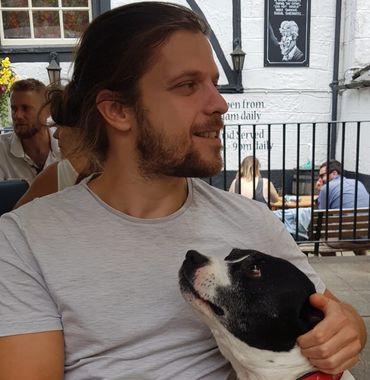
Sam Kammerling
Co-Director
Sam is a proud nerd, constantly engaging with research and thinking from every field he can to inform his practice and understanding of what makes people tick. When he’s not nerding, you can find him happily mooching up a mountain, on a surfboard (where he compensates for his lack of skill with naive enthusiasm), or in a bookshop plotting his next brain adventure.
He has managed teams in youth and mental health charities, education, and the NHS; has developed partnerships between Local Authorities, community organisations, and private enterprise; and has built learning programs tackling everything from Plato's Cave to Leadership in Complexity.

Jamie Leatherbarrow
Co-Director
Jamie has been working in mental health for the last 7 years, supporting people with serious mental illness navigate the complexity of their lives and make changes that matter. Over this time, he’s also supported many to develop professionally in this field, building the resilience, compassion, and emotional intelligence to do powerful work in trying circumstances. Soon to be a fully qualified counsellor, he is a deeply skilled listener and draws on a range of psychological perspectives to inform his thinking.
A film buff and retired food critic (these days he just loves food), his creativity and curiosity create spaces of real insight - whether considering the finer points of roasted asparagus or the subtle beliefs holding one back from change.
